In today’s fast-paced digital world, digital marketing has become an essential part of every successful business strategy. As consumers increasingly rely on search engines, social media, websites, and email to research products and services before making purchasing decisions, businesses must establish a strong online presence to remain competitive.
While many people associate digital marketing solely with increasing sales, its role extends far beyond revenue generation. Digital marketing helps businesses build brand awareness, attract qualified leads, strengthen customer relationships, improve loyalty, reduce marketing costs, and expand into new markets.
Understanding digital marketing objectives is the first step toward creating effective marketing strategies that deliver measurable and sustainable results.
Table of Contents
What Are Digital Marketing Objectives?
Digital marketing objectives are the specific outcomes businesses aim to achieve through digital channels such as websites, search engines, email marketing, and social media platforms.
These objectives help guide marketing activities toward clear, measurable goals that support business growth and improve overall performance.
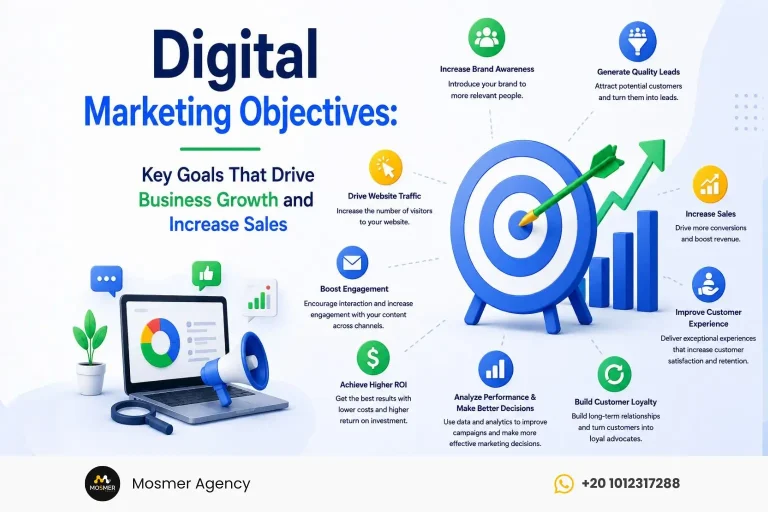
Common digital marketing objectives include:
- Increasing brand awareness
- Generating qualified leads
- Increasing sales and revenue
- Building strong customer relationships
- Improving customer loyalty
- Reducing marketing costs
- Expanding into new markets
Digital marketing objectives are the measurable goals businesses pursue through online channels to drive growth, improve performance, and strengthen customer relationships.
Why Do Businesses Rely on Digital Marketing?
Digital marketing offers several advantages over many traditional marketing methods.
Faster Audience Reach
Digital channels allow businesses to reach large audiences quickly through search engines, social media, and online advertising.
Precise Targeting
Businesses can target audiences based on:
- Location
- Interests
- Online behavior
- Demographics
This improves campaign efficiency and reduces wasted spending.
Easy Performance Measurement
Digital tools provide detailed insights into campaign performance, making it easier to monitor results and optimize marketing efforts.
Greater Flexibility and Lower Costs
Campaigns can be adjusted, improved, or paused in real time, often at a lower cost than traditional advertising methods.
Key Digital Marketing Objectives
1. Increase Brand Awareness
Building brand awareness is one of the most important digital marketing objectives, especially for new businesses or brands looking to expand their market presence.
How Digital Marketing Builds Awareness
- Consistent online visibility
- Valuable content creation
- Social media engagement
- Search engine visibility
Brand Awareness Metrics
- Reach
- Impressions
- Website traffic
- Follower growth
The more familiar people become with your brand, the more likely they are to choose it when making purchasing decisions.
2. Generate Leads
Lead generation is a critical objective because it helps convert interested prospects into potential customers.
What Is a Lead?
A lead is a person who has shown interest in a product or service by submitting information, requesting a quote, downloading content, or engaging with a business.
How Digital Marketing Generates Leads
Landing Pages
Dedicated pages designed to encourage specific actions such as signups or inquiries.
Lead Capture Forms
Forms used to collect contact information from potential customers.
Downloadable Content
Resources such as ebooks, reports, templates, and guides offered in exchange for contact details.
Why Lead Databases Matter
Building a lead database enables businesses to nurture prospects and convert them into customers over time.
3. Increase Sales and Revenue
For most businesses, increasing revenue is a primary marketing objective.
How Digital Marketing Supports Sales Growth
- Optimized customer journeys
- Targeted campaigns
- Effective offers and promotions
- Improved user experience
Improving Conversion Rates
By analyzing customer behavior and optimizing marketing assets, businesses can increase the percentage of visitors who become customers.
4. Build Strong Customer Relationships
Successful digital marketing goes beyond customer acquisition. It also focuses on maintaining long-term relationships.
Relationship-Building Channels
- Email marketing
- Social media engagement
- Educational content
- Digital customer support
Benefits of Strong Customer Relationships
- Higher satisfaction
- Increased trust
- Repeat purchases
- More referrals
Satisfied customers are more likely to become repeat buyers and advocates for your brand.
5. Improve Customer Loyalty and Trust
Trust is a key factor in customer retention and long-term business success.
Digital marketing helps strengthen loyalty through:
- Consistent communication
- Valuable content
- Customer testimonials
- Responsive customer support
- Positive user experiences
The stronger the trust, the greater the likelihood of repeat business.
6. Reduce Marketing Costs
One of the major advantages of digital marketing is its ability to deliver strong results with greater budget efficiency.
How Digital Marketing Reduces Costs
- More accurate audience targeting
- Reduced wasted spend
- Better campaign optimization
- Improved marketing efficiency
Improving Return on Investment (ROI)
Digital marketing enables businesses to track performance closely and allocate resources to the channels producing the best results.
7. Expand Into New Markets
Digital marketing creates opportunities to reach customers beyond traditional geographic boundaries.
Benefits of Market Expansion
- Access to new audiences
- Local and global targeting opportunities
- Increased growth potential
- Larger customer base
Comparison of Common Digital Marketing Objectives
| Objective | Primary Benefit | Key Metric |
| Brand Awareness | Increase brand recognition | Reach, Impressions |
| Lead Generation | Create sales opportunities | Leads |
| Sales Growth | Increase revenue | Conversion Rate |
| Customer Loyalty | Retain customers | Retention Rate |
| Cost Reduction | Improve efficiency | CPA |
| Market Expansion | Reach new audiences | New Market Growth |
Why Are Digital Marketing Objectives Important?
Clearly defined objectives help businesses:
Guide Marketing Strategy
Provide direction and establish priorities for marketing activities.
Select the Right Channels
Different objectives require different marketing channels and tactics.
Improve Budget Allocation
Focus spending on activities that generate the best results.
Measure Success
Track progress and evaluate campaign performance accurately.
Support Data-Driven Decisions
Use analytics and insights to improve future marketing efforts.
How Digital Marketing Objectives Differ by Business Type
Startups
Typically focus on:
- Brand awareness
- Acquiring first customers
- Establishing market presence
E-Commerce Businesses
Common objectives include:
- Increasing sales
- Improving conversion rates
- Reducing cart abandonment
Service-Based Businesses
Often focus on:
- Building trust
- Generating qualified leads
- Demonstrating expertise
Established Brands
Usually prioritize:
- Customer loyalty
- Market share retention
- Customer experience improvement
How to Choose the Right Digital Marketing Objectives
Define Your Primary Business Goal
Ask yourself:
- Do you need more awareness?
- More leads?
- More sales?
- Better customer retention?
Your answer will determine your marketing priorities.
Understand Your Target Audience
Knowing your audience’s needs, behaviors, and preferences helps you choose realistic and effective objectives.
Select Relevant KPIs
Every objective should be linked to measurable performance indicators.
Apply the SMART Framework
Your objectives should be:
- Specific
- Measurable
- Achievable
- Relevant
- Time-bound
The best digital marketing objectives are clear, measurable, and directly aligned with business goals.
Key Metrics for Measuring Digital Marketing Objectives
To evaluate performance effectively, businesses should track important KPIs such as:
Website Traffic
Measures the ability to attract visitors.
Conversion Rate
Measures the percentage of users who complete desired actions.
Customer Acquisition Cost (CAC)
Measures the cost of acquiring new customers.
Engagement Rate
Tracks interactions with content and campaigns.
Customer Retention Rate
Measures how well a business retains existing customers.
Return on Investment (ROI)
Measures the profitability of marketing efforts.
Common Mistakes When Setting Digital Marketing Objectives
Setting Unmeasurable Goals
Objectives should be clear, specific, and trackable.
Focusing on Only One Objective
Successful marketing strategies usually combine multiple objectives.
Ignoring Data Analysis
Failing to analyze performance limits opportunities for improvement.
Choosing the Wrong KPIs
Metrics should directly support the objective being measured.
Failing to Review Objectives Regularly
Marketing goals should evolve as markets and customer behaviors change.
How Digital Marketing Objectives Work Together
Digital marketing objectives are interconnected and support each stage of the customer journey.
- Brand awareness attracts attention.
- Lead generation creates sales opportunities.
- Sales growth drives revenue.
- Customer loyalty increases retention.
- Data analysis improves performance across all stages.
Sustainable growth occurs when digital marketing objectives work together as part of a unified strategy rather than as isolated goals.
Frequently Asked Questions About Digital Marketing Objectives
What Are Digital Marketing Objectives?
Digital marketing objectives are the goals businesses aim to achieve through online channels such as websites, search engines, social media, and email marketing. Common objectives include brand awareness, lead generation, sales growth, customer loyalty, and market expansion.
What Is the Most Important Digital Marketing Objective?
There is no single objective that is most important for every business. The right objective depends on your company’s goals, industry, and stage of growth.
Is Digital Marketing Only About Increasing Sales?
No. Digital marketing also helps businesses build brand awareness, generate leads, strengthen customer relationships, improve loyalty, and enhance customer experiences.
How Do You Measure Digital Marketing Success?
Success is measured through KPIs such as website traffic, conversion rates, lead generation, customer retention, engagement rates, and return on investment (ROI).
What Is the Difference Between Digital Marketing Objectives and Traditional Marketing Goals?
Digital marketing objectives are typically easier to measure, optimize, and track because digital channels provide real-time data and more precise audience targeting.
How Do I Set the Right Digital Marketing Objectives?
Start by identifying your business priorities, then create SMART objectives supported by measurable KPIs and realistic timelines.
How Can Mosmer Agency Help You?
At Mosmer Agency, we help businesses turn digital marketing objectives into measurable results through data-driven strategies designed to support long-term growth.
Our services include:
- Search Engine Optimization (SEO)
- Content Marketing
- Digital Advertising Management
- Conversion Rate Optimization (CRO)
- Performance Tracking and Analytics
Whether your goal is to increase brand awareness, generate more qualified leads, improve sales, or strengthen customer loyalty, our team can help you build a digital marketing strategy that delivers sustainable growth and measurable ROI.
Conclusion
Digital marketing objectives provide the foundation for every successful digital strategy. By defining clear goals such as increasing brand awareness, generating leads, boosting sales, improving loyalty, reducing costs, and expanding into new markets, businesses can focus their efforts on achieving measurable outcomes.
Success in digital marketing is not about pursuing a single objective. Instead, it comes from creating an integrated strategy where awareness, lead generation, sales, customer retention, and data analysis work together to drive long-term business growth.
When businesses align their objectives with customer needs and continuously optimize their efforts based on performance data, they position themselves for sustainable success in an increasingly competitive digital landscape.