Simply having a website is no longer enough to reach customers. With so much competition for search results, your website needs a clear strategy to help it appear in front of people actively searching for your products or services.
This is where search engine optimization (SEO) comes in, through a set of SEO steps that start with analyzing your website and keywords, and extend to improving content, structure, technical performance, and tracking results.
In this guide, we’ll walk through the most important SEO steps in a practical way, and how to apply them to build a stronger presence in search results. Mosmer Agency also explains why SEO should be treated as a complete strategy — not just a series of disconnected tweaks.
Table of Contents
What Is Meant by Search Engine Optimization (SEO)?
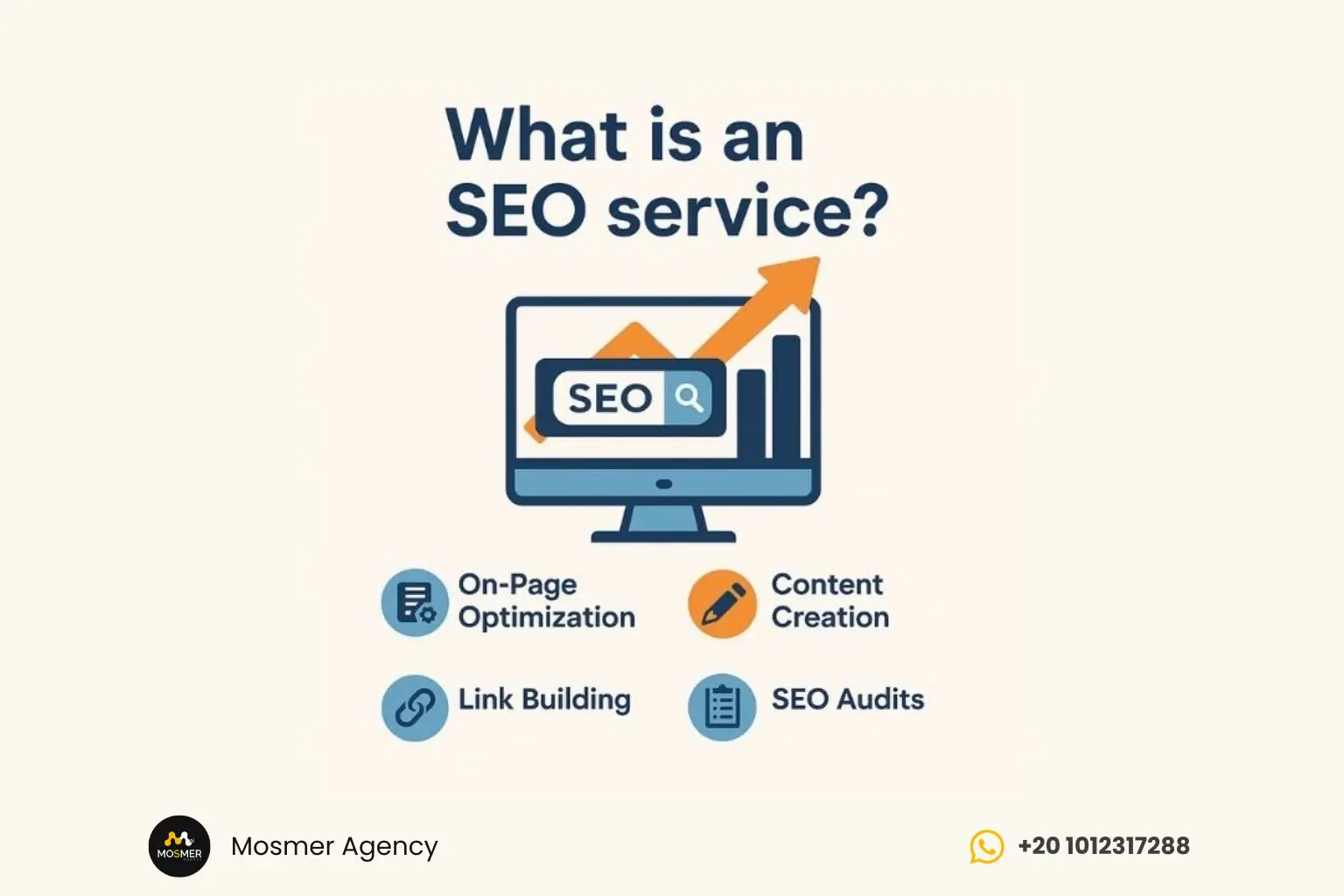
Search engine optimization (SEO) is a set of practices designed to improve a website’s pages, content, and structure, helping search engines understand it and present its pages to users whenever they’re relevant to what those users are searching for.
SEO isn’t limited to keyword usage — it covers several interconnected aspects, including content optimization, site structure, page speed, crawlability and indexing, internal and external links, and user experience.
In other words, the real goal behind the SEO steps isn’t just reaching a specific ranking — it’s building a website that’s genuinely useful and easy for both search engines and users to understand.
If you’d like a broader look at the concept of “what is SEO?” and its core elements, you can check out our comprehensive guide to search engine optimization: “What Is Search Engine Optimization (SEO)? A Complete Guide to Improving Your Website and Ranking on Google“.
How Does Google’s Search Engine Work?
Before applying the SEO steps, it helps to understand how Google actually handles website pages. A search engine generally goes through three main stages:
- Crawling: Google discovers new or updated pages through links, sitemaps, and other sources.
- Indexing: Google analyzes a page’s content and topic, then stores the information it can use to display it in search results.
- Ranking: When a user performs a search, Google’s systems determine which pages are most relevant to that query, based on a wide range of factors and signals.
So optimizing a website for search engines isn’t just about adding keywords — it requires making sure important pages can actually be discovered, crawled, and understood, and then delivering a useful answer that matches what the user is looking for.
What’s the Difference Between On-Page SEO and Off-Page SEO?
On-page SEO covers the improvements made within the website itself, such as optimizing content, titles, internal links, page structure, and images.
Off-page SEO, on the other hand, relates to signals that come from outside the website — such as relevant backlinks and mentions that help build the site’s presence and credibility.
Both types work together as part of a complete search engine optimization strategy. Good content and solid structure need support from the right external presence, while backlinks alone can’t make up for a website that’s weak in content, experience, or technical quality.
SEO Steps to Improve Your Website’s Visibility
Search engine optimization doesn’t rely on a single action — it’s a series of interconnected steps that start with understanding your website and market, move on to improving content and technical aspects, and finish with measuring results and refining your strategy.
Step 1: Analyze Your Website and Define SEO Goals
Start by understanding your website’s current state before implementing any improvements. This includes reviewing existing pages, technical performance, search visibility, traffic sources, and any issues that might prevent search engines from accessing or understanding your pages.
At the same time, define your goal for SEO: Do you want more traffic? More leads? More sales for an online store? Your goal will determine which keywords, pages, and performance metrics you should focus on.
Step 2: Research the Right Keywords
Identify the words and phrases your audience uses when searching for information, products, or services related to your business.
Don’t rely on search volume alone — how closely a keyword relates to your business and search intent often matters more. You can also break keywords down into informational, commercial, and transactional categories, then match each group to the appropriate pages.
Step 3: Analyze Competitors and Search Intent
Studying your competitors in search results helps you understand the type of content that’s ranking well, the topics it covers, and the gaps where you could offer better value.
At the same time, ask yourself: what does the user actually want when they search this term? Are they looking for an explanation, a comparison, a product, a service, or a solution to a problem? The answer shapes the right format and content for that page.
Step 4: Improve Site Structure and Internal Linking
Organize your website into a clear structure that makes it easy for both users and search engines to navigate, and build internal links that connect related pages and topics.
This helps search engines discover pages and understand how they relate to one another, while also making it easier for users to move on to content, products, or services relevant to their interests.
Step 5: Optimize On-Page Elements (On-Page SEO)
Review the core elements within each page, including:
- Page title tag
- The main H1 heading and subheadings
- Content, and how well it matches search intent
- Meta description
- Internal links
- Images and alt text, when needed
- Clear, readable URLs
The goal isn’t to repeat the keyword — it’s to make the page clear, useful, and closely aligned with the query you’re targeting.
Step 6: Improve Technical SEO
Make sure search engines can access, crawl, and index your important pages, and review any technical issues that might be affecting your website’s performance.
Key aspects worth reviewing include page speed, mobile compatibility, your sitemap file, robots.txt settings, broken links, and page status and response codes.
Step 7: Create Useful Content That Matches Search Intent
Create content that genuinely answers your audience’s questions and needs, instead of producing articles just to repeat keywords.
Every page should have a clear purpose, and it should offer original information or added value that makes it more useful to the user than other results.
Step 8: Optimize Images, Site Speed, and User Experience
Compress images and use the right formats, and review any files or elements that might be slowing down load times — while making sure your website is easy to use on mobile devices.
A fast, clear website doesn’t just serve search engines — it also helps users find information and take action more easily.
Step 9: Build External Signals and Backlinks
Backlinks from other relevant, trustworthy websites can support your site’s presence, but they should be earned naturally and tied to your content.
Quality and relevance matter far more than the sheer number of links, and you should avoid manipulative tactics that could put your website at risk in the long run.
Step 10: Track Results and Refine Your Strategy
SEO is an ongoing process, not a task that ends once you’ve implemented a set of improvements. That’s why it’s important to track metrics like organic traffic, visibility, target keyword performance, and top-performing pages.
Based on this data, you can update content, improve underperforming pages, discover new keyword and topic opportunities, and adjust your strategy in line with how your website and the competition evolve.
Ultimately, executing the SEO steps correctly comes down to prioritizing the right actions and connecting each step to a clear goal — rather than applying the same fixed checklist to every website in exactly the same way.
Start Improving Your Website’s Visibility with Mosmer
Search engine optimization isn’t a single action — it’s a complete strategy that requires analysis, execution, and continuous monitoring to achieve results that can actually grow over time.
If you’re looking for a professional way to apply the SEO steps to your website, reach out to Mosmer Agency, and let our team help you analyze your website and build an SEO strategy tailored to your business goals — one that increases your chances of reaching your target customers.
Get started with Mosmer today, and bring your website closer to the customers already searching for your services.
How Do You Create Content That Attracts Customers and Aligns with Google?
Good content is one of the most important elements of search engine optimization, but the goal isn’t to write content for search engines alone — it’s to provide useful answers that help users while also serving your business goals.
So when creating content:
- Start by understanding search intent and what the user needs to know or solve.
- Provide accurate, useful information, adding real value instead of rephrasing what other websites already offer.
- Use keywords and related terms naturally throughout the content.
- Organize your content with clear headings and easy-to-read paragraphs.
- Support important information with sources or specialized expertise when appropriate for the topic.
- Update content whenever information, services, or audience needs change.
It also helps to understand the concept of E-E-A-T, which stands for Experience, Expertise, Authoritativeness, and Trustworthiness. These are factors that help evaluate content quality and user experience, especially for topics that require a high level of accuracy.
As for using AI tools to write content, that alone doesn’t automatically mean your content will perform better or worse. What matters most is that the content is useful, accurate, and delivers real value to the user.
How Long Do the SEO Steps Take to Show Results?
There’s no fixed timeframe that guarantees when search engine optimization results will appear, since the pace of improvement depends on your website’s age, technical condition, level of competition, content quality, and the strategy being used.
Some improvements may show up relatively early, while more stable, lasting results usually require a longer period of consistent work and monitoring. It’s best to evaluate SEO based on how visibility, traffic, and page performance evolve over time — rather than expecting an instant result or a specific ranking.
Improve Your Search Visibility with Mosmer Agency
Get your business in front of customers actively searching for your products or services on Google. Our SEO strategies combine technical optimization, content, and keyword targeting to increase your visibility, attract qualified traffic, and create sustainable growth opportunities.
Contact us on WhatsApp and enjoy 50% off for website visitors.
Mistakes to Avoid When Optimizing for Search Engines
Certain practices can actually undermine your SEO strategy instead of improving it. Some of the most common mistakes include:
- Unnaturally stuffing keywords into content
- Producing large volumes of content without regard for quality or usefulness to the user
- Copying content or publishing similar pages without added value
- Ignoring technical issues that block crawling or indexing
- Focusing only on keyword rankings while neglecting traffic, leads, and conversions
- Building external links randomly or through manipulative tactics
- Targeting keywords that don’t align with your business or the searcher’s intent
- Expecting fast results and abandoning the strategy before giving it enough time to work
Avoiding these mistakes requires continuously reviewing your website and its data, and making sure every improvement you implement serves both the user and your website’s goals at the same time.
Why Choose Mosmer Agency to Improve Your Website’s Search Visibility?
Search engine optimization requires a strategy built on genuine analysis of your website, market, and competitors — not just repeatedly applying a set of generic steps.
With Mosmer Agency, the SEO process starts with understanding your business and goals, then analyzing your website and identifying the right optimization opportunities and keywords, followed by a plan that combines content, technical SEO, and continuous improvement.
If you want to increase your website’s visibility to your target audience and build a sustainable organic presence, reach out to Mosmer and take a clear first step toward improving your website’s performance in search results.
Frequently Asked Questions About SEO Steps
What are the most important SEO steps?
The process starts with analyzing your website and defining your goals, followed by keyword research and analyzing competitors and search intent. Next comes optimizing content, structure, and technical SEO, followed by building external signals, tracking results, and refining your strategy.
Can you do search engine optimization without a specialized agency?
Yes, you can implement some SEO basics on your own, but business websites and online stores may need specialists to handle technical analysis, content strategy, competition, and more comprehensive performance measurement.
Can you guarantee a top ranking on Google?
There’s no way to permanently guarantee the first-place ranking, since search results are affected by competition, ranking algorithms, content changes, and user behavior. The focus should instead be on improving your website and providing the best possible answer to search intent.
Are keywords the most important element of SEO?
Keywords matter because they help you understand what your audience is searching for, but they’re just one part of an SEO strategy. Content quality, search intent, site structure, technical performance, and user experience are all equally important.
When do SEO results start to show?
The timeline varies from one website to another depending on its condition, the competition, and the strategy used. Some indicators may appear early, while stable results typically require a longer period of implementation, monitoring, and refinement.
Does SEO need continuous updates?
Yes, because websites, competitors, and user needs are constantly changing. Regular monitoring, content updates, fixing technical issues, and discovering new opportunities all help maintain and build on your results over time.
Sources
- https://developers.google.com/search/docs/fundamentals/seo-starter-guide
- https://moz.com/beginners-guide-to-seo